
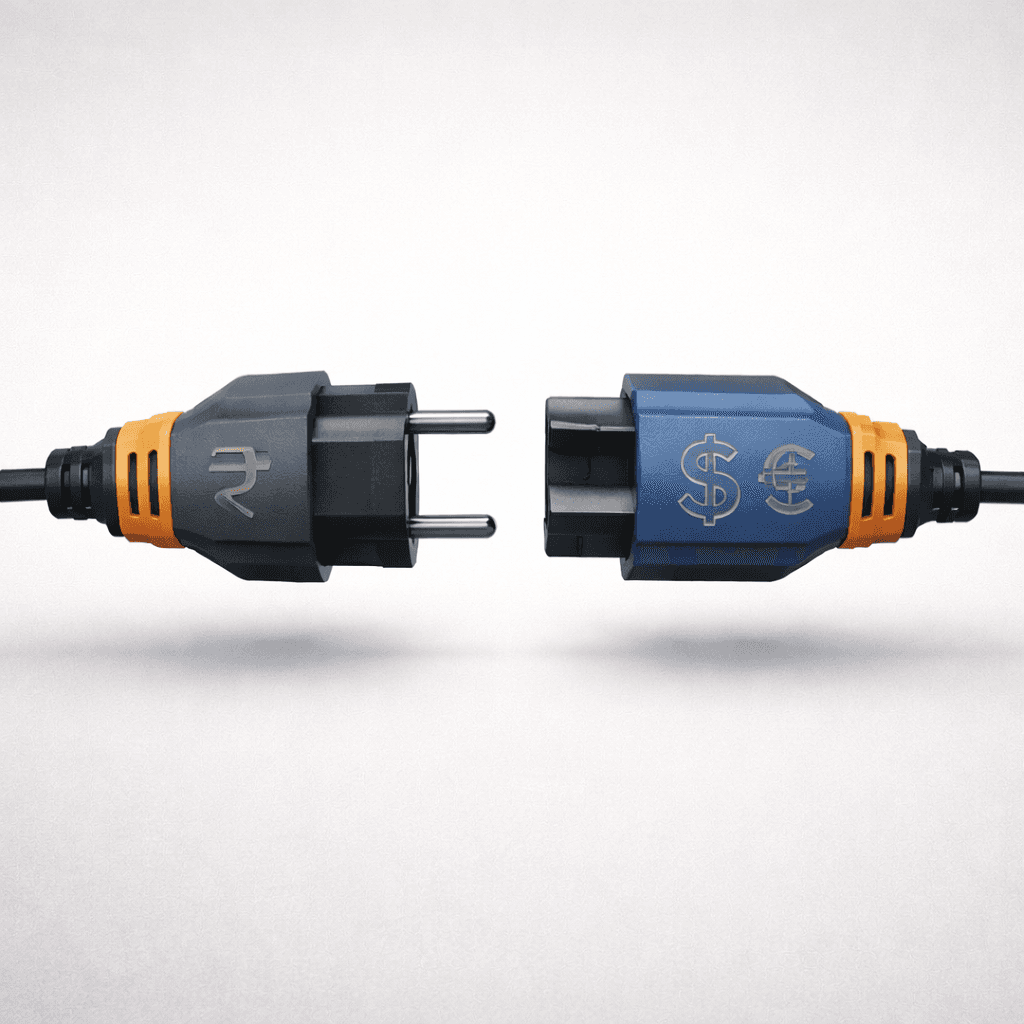
The Indian Founder’s Payment Tax: Architecting a Multi-Gateway Subscription Switchboard
Feb 28, 2026
“Just use Stripe.”
That’s the advice in almost every SaaS tutorial.
If you’re building from San Francisco, Berlin, or London, that might be reasonable advice.
If you’re building from India and selling globally?
It’s fiction.
When I started building Vocalis, I thought the hard part would be the AI.
The LLM tuning.
The persona structuring.
The content architecture.
I was wrong.
The hardest part was getting paid.
Not collecting money.
Collecting it reliably.
This is the invisible “Payment Tax” Indian founders pay.
Rejections.
Delayed approvals.
VAT compliance confusion.
Gateway quirks.
Metadata mismatches.
Three weeks before launch, I wasn’t debugging AI prompts.
I was debugging subscription states.
That’s when I stopped thinking about “integration.”
And started architecting a Payment Switchboard.
The Problem: The Merchant-of-Record Gatekeepers
Western founders use Stripe.
Indian founders often look at Merchant-of-Record platforms like:
• Paddle
• Lemon Squeezy
Because they handle VAT/GST globally.
But approval processes are slow.
Rejections are opaque.
And timelines don’t align with product momentum.
So we pivoted.
We integrated Razorpay for USD + INR.
But we made one crucial decision:
We would not hardcode it.
We would remain gateway-agnostic.
Section 1: The Metadata Mismatch
The first surprise came during USD testing.
Certain webhook events reported INR metadata even for USD plans.
If we trusted metadata blindly, a $19 transaction would look like ₹19 in our records.
That’s catastrophic.
So we built Amount-Based Currency Inference.
If amount < 200 → treat as USD
If amount > 1000 → treat as INR
We trust the money.
Not the metadata.
This is what building from constraints teaches you:
Defensive engineering.
Section 2: The Idempotency Shield
Webhooks are unreliable.
They retry.
They duplicate.
They partially fail.
If your system isn’t idempotent, you’ll:
• Create duplicate “active” subscriptions
• Bill twice
• Provision incorrectly
The only safe solution is database-level enforcement.
We implemented a PostgreSQL composite unique constraint:
UNIQUE (provider, provider_subscription_id, plan_key, status, current_period_end)
This means:
Even if a webhook fires twice,
the database blocks duplicates before Python processes them.
The database becomes the final arbiter of truth.
Application logic is secondary.
Section 3: Plan Versioning vs. Plan Keys
Early on, subscriptions were linked to string keys like:
“creator”
“agency”
This works until you change pricing.
If you modify the “Creator” plan price for a launch discount, you break renewal logic for existing customers.
We redesigned the system.
Every subscription now links to a UUID:
plan_id
The subscription_plans table supports multiple versions of the same logical plan.
Launch Special
Black Friday
Regular Pricing
All coexist.
Old users remain on original terms.
This is called Grandfathering by Design.
And it’s only possible when you decouple identity from price labels.
Section 4: The FastAPI Switchboard
Instead of scattering API keys across code, we built a dynamic Settings layer using Pydantic.
The app doesn’t hardcode keys.
It asks:
settings.PAYMENT_KEY
The Settings class checks:
ENVIRONMENT = dev or prod
And returns the correct provider credentials.
This pattern creates:
• Environment awareness
• Gateway flexibility
• Clean separation of concerns
We can plug in Paddle tomorrow without rewriting subscription logic.
That’s the Switchboard.
Why This Matters
Most SaaS founders celebrate successful checkout.
But checkout success is the easy part.
The real test is:
What happens when something fails?
Retries.
Refunds.
Currency mismatches.
Duplicate events.
That 1% of edge cases causes 100% of support chaos.
If you don’t design for failure, you will firefight forever.
The Payment Switchboard isn’t glamorous.
But it’s foundational.
The Hidden Gift of Constraints
Building from India forced me to architect more rigorously.
What felt like friction became design pressure.
And design pressure creates stronger systems.
Vocalis now runs on a billing engine that:
• Handles multi-currency intelligently
• Prevents duplicate provisioning
• Supports plan versioning safely
• Remains gateway-flexible
The AI may attract attention.
But infrastructure earns trust.
Conclusion: Getting Paid Is an Architecture Problem
Building SaaS is not just about product-market fit.
It’s about revenue integrity.
It’s about respecting user timelines and pricing history.
It’s about ensuring one webhook retry doesn’t become a support nightmare.
The Indian founder’s payment tax is real.
But if you pay it in engineering effort early,
you earn long-term system stability.
Vocalis is now live.
Built not just as a content engine —
but as a globally-ready system.
Join the Multiplier:
[vocalis.so/launch]
Related Post
Latest Post

The Real Problem I was losing my best ideas in voice memos. Not because I wasn't capturing them. I w...
Jul 9, 2026


Subscribe Us
Subscribe To My Latest Posts & Product Launches